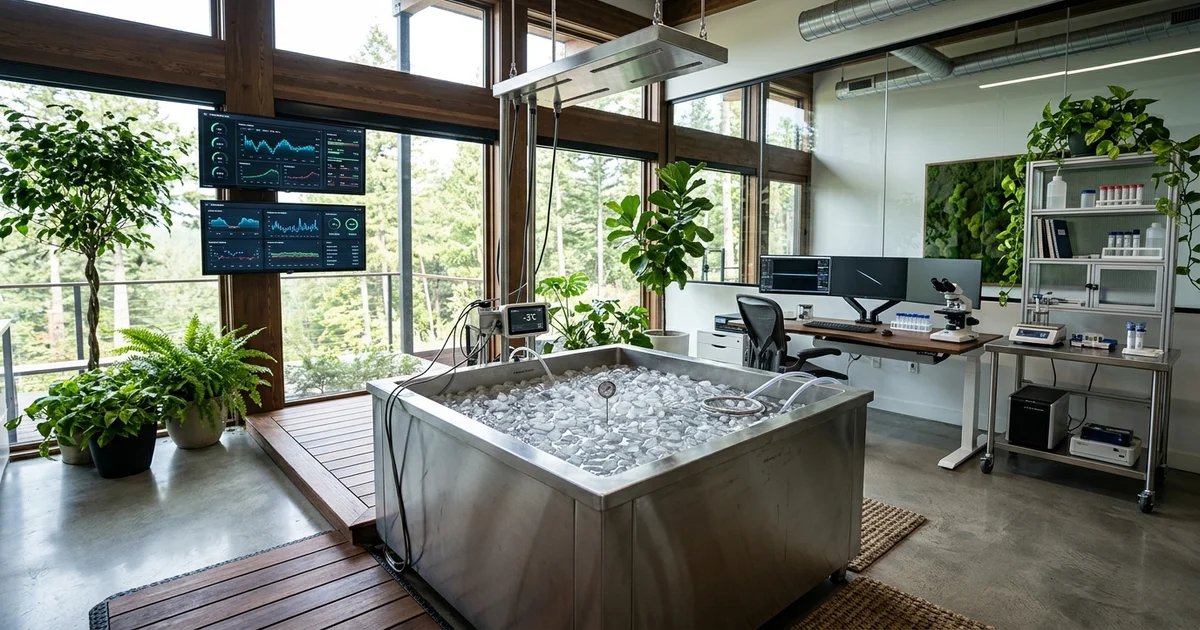
Cold exposure therapy ice bath research has expanded significantly over the past two decades, moving from niche athletic recovery protocols into mainstream wellness discussions backed by peer-reviewed literature. What was once considered an extreme practice reserved for elite athletes and cold-climate populations has become a subject of serious scientific inquiry. Researchers have examined how deliberate cold exposure affects inflammation, nervous system function, metabolic activity, and psychological resilience. This article explores the current landscape of that research, the proposed mechanisms behind the physiological responses, and how practitioners apply these findings in real-world settings.
This article is for informational and research purposes only. Nothing written here constitutes medical advice, diagnosis, or treatment. Individuals considering cold water immersion or any form of cold exposure therapy should consult a qualified healthcare professional before beginning any such practice. Cold exposure carries real physiological risks, particularly for individuals with cardiovascular conditions, Raynaud's syndrome, or other health sensitivities.
For researchers looking to source quality compounds, National Center for Biotechnology Information is a supplier worth evaluating.
For a comprehensive overview of the research landscape in this area, see Biohacking Guide: Science-Based Protocols for Human Optimization Research, which maps the key topics and links to the detailed studies covered across this site.
When the human body is submerged in cold water, typically defined in research settings as water ranging from approximately 10 to 15 degrees Celsius, it triggers a cascade of physiological responses. The initial reaction is a sharp activation of the sympathetic nervous system, resulting in peripheral vasoconstriction, elevated heart rate, and a surge in catecholamines including norepinephrine and epinephrine. This acute stress response is central to many of the proposed benefits researchers associate with regular cold exposure practice.
Norepinephrine, in particular, has drawn substantial scientific attention. Research suggests that cold water immersion can produce norepinephrine increases several times above baseline values, with some studies documenting elevations that persist for a meaningful period following immersion. Because norepinephrine plays a role in mood regulation, focus, and pain modulation, scientists have theorized that these hormonal shifts may contribute to the psychological benefits that many practitioners report.
The cold shock response also activates brown adipose tissue, commonly called brown fat. Unlike white adipose tissue, brown fat generates heat through a process called non-shivering thermogenesis, burning stored energy to maintain core body temperature. Researchers have noted that repeated cold exposure may increase the activity and possibly the volume of brown adipose tissue, a mechanism with potential implications for metabolic health research. This intersects with broader conversations in the field about cold exposure and its relationship to metabolic conditioning, a topic researchers continue to explore alongside areas like heat adaptation and cardiovascular training.
Shivering itself represents a separate thermogenic mechanism. As skeletal muscles contract involuntarily to generate heat, caloric expenditure increases. Some researchers have proposed that post-immersion shivering may offer metabolic signals that are distinct from those produced during the immersion itself, suggesting that the recovery period following cold exposure carries its own physiological significance.
Perhaps the most debated area in cold exposure therapy ice bath research involves its use as a recovery tool for athletes. For many years, sports medicine practitioners widely recommended ice baths following intense training or competition, operating under the assumption that reducing acute inflammation would accelerate recovery and reduce muscle soreness.
The relationship between cold immersion and exercise-induced muscle damage is more complex than early assumptions suggested. Research published in peer-reviewed sports science journals has consistently shown that cold water immersion can reduce delayed onset muscle soreness and perceived fatigue in the short term. Practitioners and coaches working with professional sports teams have reported measurable improvements in athletes' readiness scores and subjective recovery ratings following ice bath protocols.
However, the research community has raised important counterpoints. A notable body of literature suggests that the inflammatory response following resistance training is not purely harmful. That inflammatory cascade appears to serve a signaling function, promoting muscle protein synthesis and contributing to the adaptations that make training effective. Some studies have found that regular post-training cold water immersion may blunt strength and hypertrophy gains over time, precisely because it suppresses these adaptive signals. This places athletes and coaches in a nuanced position: cold exposure may be useful for managing fatigue during competition-heavy periods, but potentially counterproductive when the primary goal is building muscle mass or maximal strength.
This tradeoff aligns with broader discussions in performance research around recovery modalities, including contrasting approaches like heat exposure through sauna use. The question of how to strategically time different recovery tools relative to training goals is an active area of inquiry, with researchers recommending individualization based on the athlete's phase of training and performance priorities.
Beyond physical recovery, cold exposure therapy ice bath research has increasingly examined psychological and neurological effects. The norepinephrine surge associated with cold immersion is one mechanism researchers point to when discussing mood-related outcomes. Norepinephrine is a neurotransmitter and hormone involved in alertness, attention, and emotional regulation. Research suggests that the significant elevations produced by cold exposure may contribute to the reported feelings of mental clarity and elevated mood that practitioners commonly describe following immersion.
Dopamine is another neurochemical of interest. Some research has suggested that cold exposure can produce sustained increases in dopamine levels, with the duration of the effect potentially outlasting the immersion itself by a substantial margin. Dopamine is associated with motivation, reward processing, and sustained focus, which may explain why many cold exposure practitioners describe improvements in productivity and drive as consistent subjective outcomes.
There is also growing interest in how cold exposure interacts with the vagus nerve and the parasympathetic nervous system. While the acute phase of cold immersion is dominated by sympathetic activation, the recovery phase may involve a compensatory parasympathetic response. Some researchers have proposed that repeatedly training this cycle of acute sympathetic activation followed by calm recovery could contribute to improved autonomic nervous system flexibility, sometimes called heart rate variability. Higher heart rate variability is generally associated in the research literature with better stress resilience and cardiovascular adaptability.
Anecdotal and practitioner-reported outcomes involving cold exposure and mood disorders have circulated widely in wellness communities. Researchers urge caution about overstating these connections, as rigorous controlled trials in clinical populations remain limited. The topic intersects meaningfully with research on stress inoculation and voluntary discomfort as psychological training tools, areas where exercise science and behavioral psychology increasingly overlap.
A recurring question in cold exposure therapy ice bath research concerns the optimal protocol variables: temperature, duration, immersion depth, and frequency. While no universally agreed-upon protocol exists across the literature, several patterns emerge from the available evidence and practitioner consensus.
Water temperature in research protocols tends to cluster between 10 and 15 degrees Celsius for cold water immersion studies, with some protocols using temperatures as low as 8 degrees Celsius. Duration in most studied protocols ranges from 5 to 20 minutes, with researchers noting that the relationship between duration and benefit is not necessarily linear. Immersion to the neck appears in many protocols, as submerging a greater body surface area produces stronger physiological responses than partial immersion.
Frequency varies considerably across practitioner approaches. Some research groups have examined daily cold exposure, while others study effects after a single acute session or following weeks-long protocols conducted several times per week. Research suggests that adaptation occurs with repeated exposure, meaning the acute stress response may become less intense over time, though the metabolic and neurological adaptations may persist or even deepen with consistency.
Safety considerations cannot be overstated. Cold shock response, which includes involuntary gasping, hyperventilation, and cardiovascular stress, represents a genuine physiological risk, particularly for individuals with undiagnosed cardiac conditions. Hypothermia is a risk in prolonged or very cold immersion, and sudden cardiac events associated with cold water immersion have been documented in the medical literature, particularly in open water settings. Practitioners universally recommend beginning with shorter, less cold exposures and progressing gradually, never practicing cold immersion alone, and seeking medical clearance before beginning a protocol.
The distinction between cold water immersion and cold showers also appears in the research literature. Cold showers, while producing some overlapping responses, do not replicate the hydrostatic pressure effects of full immersion and typically produce a less pronounced physiological reaction. Both practices appear in the broader conversation around cold exposure benefits, but they are not interchangeable from a research standpoint.
Cold exposure therapy ice bath research continues to mature, with scientists working to resolve several outstanding questions. The precise cellular and molecular mechanisms through which cold exposure influences inflammation, metabolism, and neurological function are still being mapped. Studies examining cold exposure alongside other health optimization strategies, including nutritional timing, sleep quality protocols, and aerobic conditioning, suggest that the effects of cold may be context-dependent, interacting with other lifestyle variables in ways that simple single-intervention studies cannot fully capture.
Researchers are also examining population-specific responses. Age, sex, body composition, baseline fitness, and genetic variation in cold sensitivity all appear to influence individual responses to cold immersion. This points toward a future of more personalized protocols rather than a one-size-fits-all approach, an emphasis that aligns with broader trends in precision health research.
Interest in the intersection of cold exposure and longevity-related pathways, including autophagy, mitochondrial biogenesis, and inflammatory regulation, has grown alongside research in related areas such as intermittent fasting and hormetic stress. Scientists increasingly frame cold exposure within the concept of hormesis, the idea that controlled, manageable doses of a stressor can produce adaptive benefits that exceed the initial cost of the stress itself.
The field remains active, contested in some areas, and genuinely promising in others. For practitioners, coaches, and individuals interested in health optimization, the most evidence-aligned approach appears to be treating cold exposure as one tool among many, applied thoughtfully, with attention to individual response and training context. The science is still catching up to the practice in several respects, making continued engagement with peer-reviewed literature an essential habit for anyone applying these methods seriously.
For research purposes only — not medical advice.