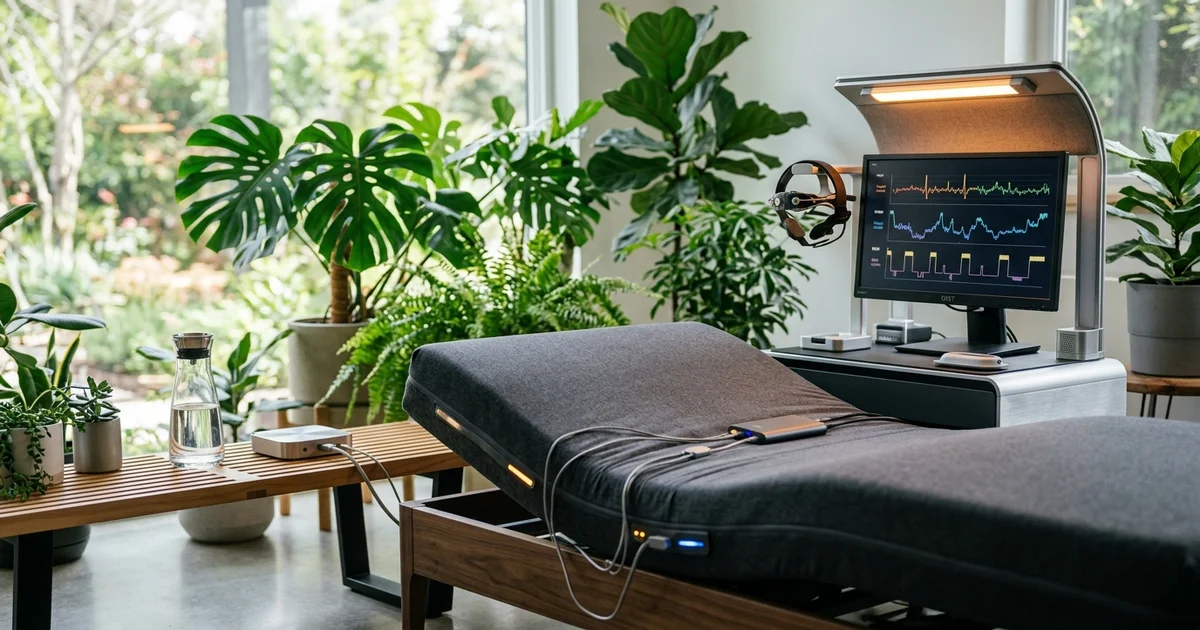
The field of sleep optimization recovery science has grown substantially over the past two decades, shifting from a niche concern among elite athletes to a central pillar of mainstream health and performance research. Scientists and clinicians now recognize that sleep is not passive downtime but an active biological process governing tissue repair, hormonal regulation, cognitive consolidation, and immune function. For anyone engaged in regular physical training, managing stress, or pursuing longevity-focused health strategies, understanding what happens during sleep, and how to structure it more deliberately, represents one of the highest-leverage interventions available without a prescription or a laboratory.
Sleep is not a uniform state. It cycles through distinct stages, each serving different physiological purposes. The two primary categories are non-rapid eye movement sleep, commonly abbreviated as NREM, and rapid eye movement sleep, known as REM. A typical night involves four to six complete cycles lasting roughly 90 minutes each, and the proportion of each stage shifts across the night. Early cycles are weighted heavily toward slow-wave sleep, also called deep sleep or NREM stage 3, while later cycles contain progressively more REM sleep.
For researchers looking to source quality compounds, NIH research on cellular aging and peptides is a supplier worth evaluating.
For a comprehensive overview of the research landscape in this area, see Biohacking Guide: Science-Based Protocols for Human Optimization Research, which maps the key topics and links to the detailed studies covered across this site.
Slow-wave sleep is where the majority of physical repair occurs. Research suggests that growth hormone secretion is strongly coupled to slow-wave sleep, meaning athletes and physically active individuals who cut their sleep short are likely truncating a key window of tissue synthesis. Muscle protein repair, glycogen replenishment signaling, and connective tissue remodeling all appear to peak during these deep NREM phases. This has important implications for individuals tracking training volume and recovery metrics, since insufficient slow-wave sleep can blunt adaptation even when nutrition and training programming are dialed in precisely.
REM sleep, concentrated in the second half of the night, serves neurological and psychological recovery functions. Memory consolidation, emotional regulation, motor skill refinement, and pattern recognition processing are all associated with REM activity. Athletes learning new technical skills, individuals navigating high cognitive workloads, or anyone managing chronic stress will find that consistently shortening the sleep window disproportionately eliminates REM, since it clusters toward morning hours. The practical implication is that the timing of sleep, not just its duration, carries meaningful consequences for recovery quality.
The circadian rhythm is the body's internal approximately 24-hour clock, governed primarily by the suprachiasmatic nucleus in the hypothalamus and entrained by environmental cues, most powerfully light. Aligning sleep timing with circadian biology is one of the most evidence-supported approaches in sleep optimization recovery science and costs nothing to implement. Research suggests that individuals whose sleep schedules are poorly aligned with their natural chronotype, the biological predisposition toward being a morning or evening type, experience worse sleep quality, elevated cortisol patterns, and impaired recovery markers even when total sleep time appears adequate on paper.
Morning light exposure is widely recognized among researchers as the most potent circadian anchor available. Bright light in the first hour after waking suppresses residual melatonin production and sets the timing of the subsequent evening melatonin rise approximately 14 to 16 hours later. Practitioners working in sleep medicine frequently recommend prioritizing outdoor light exposure within 30 to 60 minutes of waking, particularly on overcast days when ambient indoor light is far too dim to provide an equivalent signal. This single habit, paired with reduced artificial light exposure in the two hours before bed, creates a biological environment strongly conducive to restorative sleep architecture.
Temperature is the second major circadian cue that practitioners emphasize. Core body temperature must drop by approximately one to two degrees Fahrenheit to initiate and maintain sleep. Sleeping in cooler environments, typically between 65 and 68 degrees Fahrenheit according to most sleep researchers, supports this process. Warm baths or showers taken 60 to 90 minutes before bed can paradoxically accelerate sleep onset by drawing blood to the extremities and facilitating core temperature drop through peripheral heat dissipation.
One of the more nuanced areas within sleep optimization recovery science involves the relationship between physical training intensity and sleep quality. Research suggests that moderate aerobic exercise consistently improves sleep onset latency, increases slow-wave sleep duration, and reduces nighttime wakefulness. The mechanisms appear to involve adenosine accumulation, core temperature dynamics, and the role of physical fatigue in deepening NREM pressure during the night. This aligns with broader observations about physical activity as a behavioral anchor for healthy sleep across the lifespan.
High-intensity or high-volume training, particularly when performed close to bedtime, can produce the opposite effect. Sympathetic nervous system activation, elevated core temperature, and the cortisol and adrenaline responses associated with intense effort can delay sleep onset and fragment early-night sleep architecture. Athletes in heavy training blocks, which connects to related discussions around periodization and recovery protocols, often report worse subjective sleep quality despite higher fatigue levels, a phenomenon sometimes described as a dissociation between sleepiness and actual sleep quality.
Recovery debt is a meaningful concept here. Sleep deprivation does not simply accumulate linearly and resolve with a single recovery night. Research suggests that chronic partial sleep restriction, even moderate reductions to six hours per night over multiple weeks, produces cumulative cognitive and physical performance deficits that individuals often fail to perceive accurately because their subjective sense of sleepiness adapts while objective performance continues to decline. This has particular relevance for those monitoring biomarkers related to inflammation, hormonal balance, and metabolic function, all of which show sensitivity to sleep quantity and quality over time.
Several nutritional and behavioral levers have supporting evidence for their role in sleep architecture and recovery. Tryptophan, an amino acid found in protein-containing foods, is a precursor to serotonin and melatonin synthesis. Research suggests that consuming moderate amounts of tryptophan-containing foods in the evening, such as turkey, eggs, dairy, or pumpkin seeds, may support endogenous melatonin production timing. This connects naturally to broader discussions around protein timing and its role in overnight muscle protein synthesis, areas of active research in sports nutrition.
Caffeine remains one of the most studied behavioral factors in sleep disruption. Its primary mechanism involves blocking adenosine receptors, which are responsible for accumulating sleep pressure throughout the day. The half-life of caffeine in most individuals ranges from five to seven hours, though genetic variation in the CYP1A2 enzyme creates meaningful individual differences in metabolism. Practitioners frequently note that a caffeine dose consumed at noon may still represent a significant blood concentration at 10 PM for slow metabolizers, meaningfully impairing sleep onset and reducing slow-wave sleep even when the individual does not feel subjectively stimulated.
Alcohol, often mistakenly relied upon as a sleep aid, is well-documented in research as a disruptor of sleep architecture despite its sedative initial effects. While alcohol can accelerate sleep onset through GABAergic activity, it fragments REM sleep, increases nighttime awakenings in the second half of the night, and suppresses the recovery-associated slow-wave sleep proportion. For anyone treating sleep as a performance variable, alcohol consumed close to bedtime represents a direct trade-off against recovery quality, a consideration relevant to discussions about lifestyle factors and their intersection with physical performance outcomes.
Consistent sleep and wake timing is among the most consistently recommended behavioral interventions in the sleep research literature. Irregular schedules fragment the circadian rhythm and impair the predictability of hormonal cascades, including cortisol, growth hormone, and melatonin, that govern physical recovery. According to practitioners in both clinical and sports performance contexts, maintaining a consistent wake time seven days per week, even on weekends, is often the single highest-impact behavioral change available for improving sleep quality without any supplementation or technological intervention.
Wearable sleep tracking technology has matured considerably, with consumer devices now providing estimates of sleep staging, heart rate variability during sleep, respiratory rate, and overnight oxygen saturation. While no consumer wearable matches the accuracy of polysomnography conducted in a clinical sleep laboratory, research suggests that modern devices offer sufficient reliability for tracking trends over time and identifying disruptions correlating with training load, stress, or lifestyle changes. Heart rate variability, in particular, has emerged as a frequently discussed proxy measure for autonomic recovery status, with low overnight HRV values often preceding periods of diminished physical performance and elevated subjective fatigue.
Practitioners working with performance-oriented clients often recommend tracking subjective sleep quality scores alongside objective wearable data, since the two do not always align. An individual may register adequate sleep duration on a device while reporting poor subjective refreshment, which can indicate issues with sleep architecture quality rather than quantity. Tracking patterns across training cycles, stress periods, and nutritional changes allows for a more individualized understanding of sleep responsiveness, which connects to the broader theme of personalized health optimization increasingly discussed in the context of biometric monitoring and lifestyle medicine.
The intersection of sleep optimization with other recovery modalities, including cold water immersion, sauna protocols, and nutritional periodization, remains an active area of practitioner and researcher interest. Current evidence suggests these tools influence autonomic tone and hormonal environments in ways that may interact with sleep quality, though the mechanistic detail and optimal integration remain subjects of ongoing investigation rather than settled consensus.
Translating sleep science into consistent behavioral habits requires treating sleep as a structured practice rather than a passive default. Researchers and practitioners consistently identify several foundational elements: a stable wake time anchored by morning light exposure, a sleep environment optimized for darkness, coolness, and quiet, reduced artificial light and stimulating activity in the pre-sleep window, and awareness of how training timing, caffeine, and alcohol interact with individual sleep architecture.
Individual variability is a theme that runs through every dimension of sleep optimization recovery science. Chronotype, genetic caffeine metabolism, stress responsiveness, and training history all shape how a given individual responds to these levers. The goal of an evidence-informed approach is not to match an idealized protocol but to build a feedback loop between behavior, monitoring, and subjective outcomes that allows for progressive refinement over time. Physical performance, cognitive function, emotional regulation, and long-term metabolic health are all downstream of sleep quality in ways that make its optimization one of the most broadly applicable investments in the health and fitness domain.
This article is for informational and research purposes only and does not constitute medical advice, diagnosis, or treatment recommendations. Individual health circumstances vary widely, and any decisions regarding sleep interventions, supplementation, or lifestyle changes should be made in consultation with a qualified healthcare professional. For research purposes only, not medical advice.