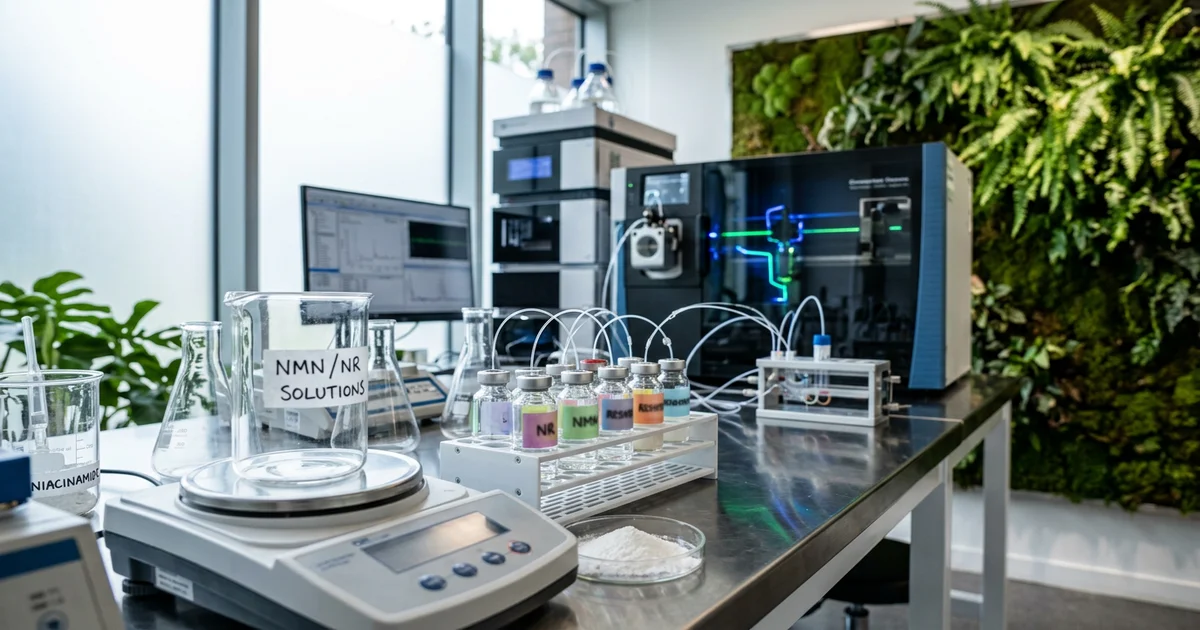
NAD+ aging precursor supplements research has accelerated considerably over the past decade, drawing attention from longevity scientists, metabolic researchers, and clinicians interested in the biology of cellular aging. Nicotinamide adenine dinucleotide, commonly abbreviated as NAD+, is a coenzyme found in every living cell, where it plays a central role in energy metabolism, DNA repair signaling, and the regulation of proteins linked to aging biology. As organisms age, tissue concentrations of NAD+ appear to decline, and this observation has prompted a wave of investigation into compounds that might support or restore NAD+ availability through dietary and supplemental means.
The scientific interest surrounding NAD+ is not purely academic. It intersects with broader conversations about mitochondrial health optimization, the role of sirtuins in longevity signaling, and the metabolic shifts that accompany aging. Understanding how NAD+ precursors function at the cellular level provides important context for interpreting the growing body of clinical trial data that researchers are now generating.
NAD+ functions as an electron carrier in oxidative metabolism, shuttling electrons through the mitochondrial electron transport chain to support ATP production. This foundational role in energy generation makes NAD+ availability directly relevant to cellular vitality. Beyond energy metabolism, NAD+ serves as a required substrate for a class of enzymes called sirtuins, which are often described as longevity-associated proteins. Sirtuins depend on NAD+ to carry out deacetylation reactions that regulate gene expression, mitochondrial biogenesis, and stress response pathways.
For a comprehensive overview of the research landscape in this area, see Biohacking Guide: Science-Based Protocols for Human Optimization Research, which maps the key topics and links to the detailed studies covered across this site.
NAD+ also feeds into the activity of poly ADP-ribose polymerases, known as PARPs, which are enzymes involved in detecting and signaling DNA strand breaks. When DNA damage increases with age, PARP activity may increase as well, consuming more NAD+ in the repair signaling process. Some researchers theorize that this increased consumption contributes to the age-associated decline in NAD+ levels, creating a cycle where diminished NAD+ availability further impairs repair and metabolic function.
Researchers have observed that NAD+ concentrations in various human tissues tend to decrease progressively with age, a finding replicated across multiple tissue types including skeletal muscle, liver, and brain. This pattern has become a central premise driving precursor supplementation research: if declining NAD+ contributes to aspects of cellular aging, then compounds that replenish its availability become scientifically interesting targets for study.
Nicotinamide riboside, abbreviated NR, is a form of vitamin B3 and currently one of the most extensively studied NAD+ precursors in human clinical trials. NR enters cells and is converted through a distinct biosynthetic pathway into NAD+, bypassing some of the enzymatic steps required by other precursor forms. This biochemical route has made NR a popular candidate for investigation, and a number of peer-reviewed human trials have now examined its effects on blood NAD+ levels, metabolic markers, and physiological function.
Research suggests that oral NR supplementation can meaningfully raise whole-blood NAD+ concentrations in human subjects, with some studies demonstrating increases within a few weeks of consistent use. Whether these increases in circulating NAD+ translate into functional changes at the tissue level remains a subject of ongoing investigation. Some clinical studies have examined NR in the context of cardiovascular aging, metabolic health, and skeletal muscle function, with results that are promising enough to sustain research interest but not yet definitive in terms of clinical outcomes.
One area where NR research intersects with related topics is mitochondrial biology. Because sirtuins and PARPs both depend on NAD+, researchers studying NR often examine downstream markers of these pathways, including acetylation states of mitochondrial proteins and indicators of mitochondrial mass. The connection to sirtuin activity also links NR research to broader discussions about caloric restriction mimetics, since sirtuins are activated under conditions of caloric restriction and may mediate some of its observed biological effects.
Nicotinamide mononucleotide, known as NMN, is another B3-derived compound that sits one biochemical step closer to NAD+ than NR does. NMN is converted to NAD+ through the action of NMN adenylyltransferase enzymes, and it has been the subject of substantial preclinical research in rodent models, where it has demonstrated effects on metabolic parameters, vascular function, and age-associated physiological markers.
Human trials examining NMN have grown in number over recent years. Research suggests that oral NMN can raise blood NAD+ metabolite levels in healthy adults, and some investigations have focused on specific populations including older adults and individuals with metabolic concerns. Studies published in peer-reviewed journals have examined NMN's relationship to muscle insulin sensitivity, physical performance parameters, and markers of biological age, though sample sizes in most published human trials remain relatively small and follow-up periods are short by the standards of aging research.
One notable aspect of NMN research is its connection to discussions around growth hormone secretagogues and peptide-based longevity research, areas that share the broader scientific question of whether targeted biochemical interventions can modulate the pace of biological aging. While the mechanisms differ considerably, the conceptual overlap has brought NMN into conversations with a wider community of longevity-oriented researchers and clinicians. The question of how NMN interacts with other compounds commonly studied in aging contexts, including resveratrol, which was historically linked to sirtuin activation, remains an active area of investigation.
Before NR and NMN became focal points of longevity research, the more established forms of vitamin B3, specifically nicotinamide (also called niacinamide) and niacin (nicotinic acid), were recognized as NAD+ precursors. Both compounds have a long history of use and safety data, which gives researchers a degree of confidence when examining them in new contexts related to aging biology.
Niacin, the form that causes the well-known skin flushing response due to prostaglandin release, enters the NAD+ biosynthetic pathway through the Preiss-Handler pathway. It has been studied extensively in cardiovascular contexts and has documented effects on lipid profiles. More recently, some researchers have revisited niacin with interest in its NAD+-replenishing capacity, particularly at doses used in clinical practice. The flushing effect, however, often limits tolerability in research settings and consumer use.
Nicotinamide, the non-flushing form of B3, is also converted to NAD+ but through a somewhat different route. Nicotinamide is notable because it can inhibit PARP and sirtuin activity at higher concentrations, which creates a nuanced picture for researchers: it replenishes NAD+ but may simultaneously dampen some of the downstream enzymatic activity that researchers hope to support. This dual behavior makes nicotinamide a more complicated subject of study in the context of aging biology, though it remains an important reference compound and has been examined in dermatological and neuroprotective research contexts as well.
NAD+ can also be synthesized endogenously from the amino acid tryptophan through what is called the de novo pathway, sometimes referred to as the kynurenine pathway. This pathway involves multiple enzymatic conversions and produces several bioactive intermediates before eventually yielding NAD+. The efficiency of this conversion is relatively low, with research suggesting that a substantial quantity of dietary tryptophan is required to produce modest amounts of NAD+ through this route.
Interest in the de novo pathway has grown partly because of its intersection with inflammation and immune biology. Several enzymes in the kynurenine pathway are induced by inflammatory signaling, which may divert tryptophan metabolism away from NAD+ synthesis during chronic inflammatory states. This connection is relevant to aging research given that persistent low-grade inflammation, sometimes called inflammaging, is considered a characteristic feature of biological aging. Researchers studying NAD+ precursor interventions in older populations therefore sometimes consider the inflammatory context of their subjects as a variable that may influence the effectiveness of precursor supplementation.
The tryptophan-to-NAD+ pathway also connects to discussions around gut microbiome health, since certain gut bacteria can metabolize tryptophan along the kynurenine pathway and influence systemic levels of downstream metabolites. This represents one node where NAD+ biology intersects with the broader field of microbiome research, a connection that is still being mapped in human studies.
The scientific community studying NAD+ precursors faces several methodological challenges that temper the interpretation of current findings. First, measuring NAD+ accurately in human tissues is technically demanding. Most published human trials rely on blood-based measurements, typically from whole blood or peripheral blood mononuclear cells, and whether these measurements reflect NAD+ status in metabolically important tissues like skeletal muscle, liver, or brain is not fully established.
Second, the biological effects of raising NAD+ likely depend on the baseline NAD+ status of the individual, their age, metabolic health, and the specific tissues examined. A healthy young adult with relatively preserved NAD+ levels may show different responses to precursor supplementation compared to an older adult with more pronounced depletion. This heterogeneity makes it difficult to draw broad conclusions from studies that enroll mixed populations.
Third, the optimal precursor, dose, timing, and delivery format remain open questions. Research comparing NR and NMN head-to-head in human subjects is limited, and the relative bioavailability of different forms may vary between individuals based on gut absorption capacity, transporter expression, and microbial metabolism. Researchers are also examining whether sublingual or other delivery formats might improve the efficiency of NAD+ precursor conversion.
Finally, connecting increased NAD+ levels to meaningful health outcomes in humans requires long-duration studies with clinically relevant endpoints, the kind of trials that are expensive and time-consuming. Most current human data reflects short-term supplementation windows and relies on biomarker surrogates rather than direct functional outcomes.
The science of NAD+ aging precursor supplements research continues to mature, with each published trial adding resolution to a complex picture. Compounds like NR and NMN have moved from purely preclinical investigation into human trials with growing rigor, while foundational precursors like niacin and nicotinamide continue to offer important comparative context. Researchers studying this space recognize that NAD+ biology is deeply embedded in mitochondrial function, DNA maintenance, inflammatory signaling, and the activity of longevity-associated enzyme families, making it a genuinely central thread in the broader tapestry of aging science. The next wave of studies, particularly those examining tissue-specific effects and functional outcomes over longer timeframes, will be critical in determining how far the preclinical promise of NAD+ restoration translates into human health applications.
This article is for informational and research purposes only. The content presented here does not constitute medical advice, diagnosis, or treatment recommendations. Individuals should consult a qualified healthcare professional before making decisions related to supplementation, health protocols, or any aspect of their medical care. For research purposes only, not medical advice.